
By Alison Cooley
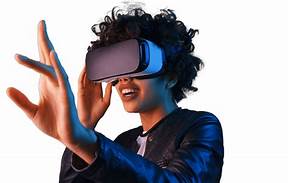 Many gamers put on virtual reality (VR) headsets and enter a fictional realm, allowing them to experience things as if they are real. Imagine what it would be like to fight like Batman or interact with dinosaurs—computer-generated sensory stimuli make it possible!
The University of Pittsburgh School of Medicine is using this type of technology outside the video gaming arena. Emerging technologies like extended reality headsets are now helping medical students learn more about the human body.
When students like Ryan Kelly, Class of 2027, put on VR or augmented reality (AR) headsets in the lab, they can now see structures in three dimensions and their locations relative to everything else in the body.
 “While the cadaver dissection is still a key part of medical anatomy, we are limited by the fact that we cannot see the heart beating or lungs expanding while seeing their internal structures, but the technology in the virtual lab helps us to see that,” he said.
Alexi Zukas, coordinator of the Pitt Health Sciences Emergent Technology Labs, provides opportunities for students to learn with hands-on materials like the VR headsets. It’s his job to figure out the best way for students to utilize all of the novel, emerging technologies in an academic setting.
Another emerging technology is the Anatomage table, a digital touchscreen cadaveric dissection table that runs on Microsoft Windows. The table can do much more than simulate gross human anatomy. According to Zukas, you can look at regional anatomy or specific organ physiology.
“There’s a functional anatomy section on the table that can simulate a heart beating in both sinus and abnormal rhythms with a 12-lead EKG (electrocardiogram). It allows users to see cranial nerves in detail, including how strokes affect them. Additionally, the table contains thousands of both human and animal case studies, and instructors can create their own custom courses and curricular prosections on the table.”
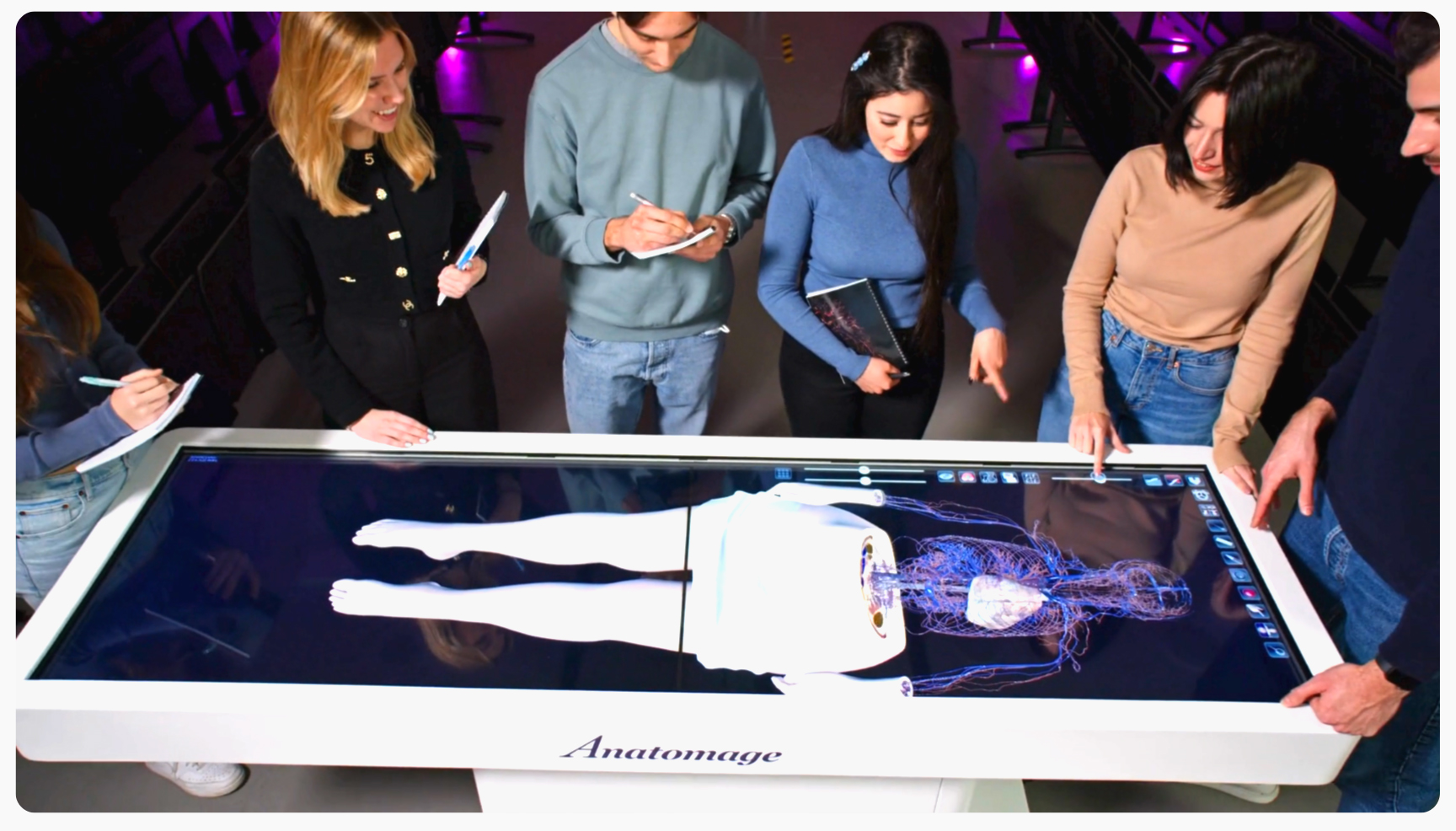
Photo from anatomage.com
Kelly, a teaching assistant for the first-year anatomy course, said his favorite activity with the Anatomage table is creating quizzes. Although Kelly enjoys using new technologies like the Anatomage table, he believes that the traditional anatomy lab will always be more effective for teaching anatomy to medical students, partially as a rite of passage and partially because the physical hands-on aspect is something that cannot be recreated in a virtual environment.
Zukas agrees that in a traditional lab—where you have a cadaver in front of you, usually prosected to whatever goals the course is attempting to achieve—you can clearly see every detail (because you’re not using a screen). Models are limited to how high the resolution of the scan was. However, Zukas feels that given enough time or the correct circumstances, technology may be able to replace typical anatomy lessons. “Technology isn’t at that level quite yet,” he said.
For now, Zukas believes that the technology we do have is a fantastic workaround, allowing Pitt undergrads, who don’t have access to physical cadavers, to see gross human anatomy in 3D. Zukas explains, “Pitt Health Sciences uses software on the HoloLens [AR] headsets and Quest VR headsets as supplemental tools and additional options for exploration of gross human anatomy, physiology, standardized patient simulation and bedside-assistance simulation. This software allows instructors to create what are effectively 3D slide decks of ideal human organs and organ systems with labels, and they can use those to host a course entirely within the headset. As a matter of fact, an undergrad Anatomy and Physiology course taught by Jennifer Roccisana uses this type of technology, replacing a lab.”

Using HoloLens technology, Pitt students interact hands-on (virtually)
with 3D heart anatomy. Photo credit: Alexi Zukas
Zukas firmly believes that VR headsets, AR headsets and digital anatomy table simulation are the way of the future when it comes to how students learn medical and biological content. And perhaps future physicians like Kelly, who aspires to specialize in orthopaedic surgery, will one day use some of this new technology in their doctor’s offices. For now, Kelly is grateful for all the opportunities he’s had at the University of Pittsburgh School of Medicine, including access to world-class physicians.